
The Stuttering “Iceberg”: Disfluency + Struggle
The experience of stuttering is often described using the “iceberg” model. Like an iceberg, stuttering has surface features that are directly observable by people in our environment, and it has below-the-surface features that go unobserved by others.
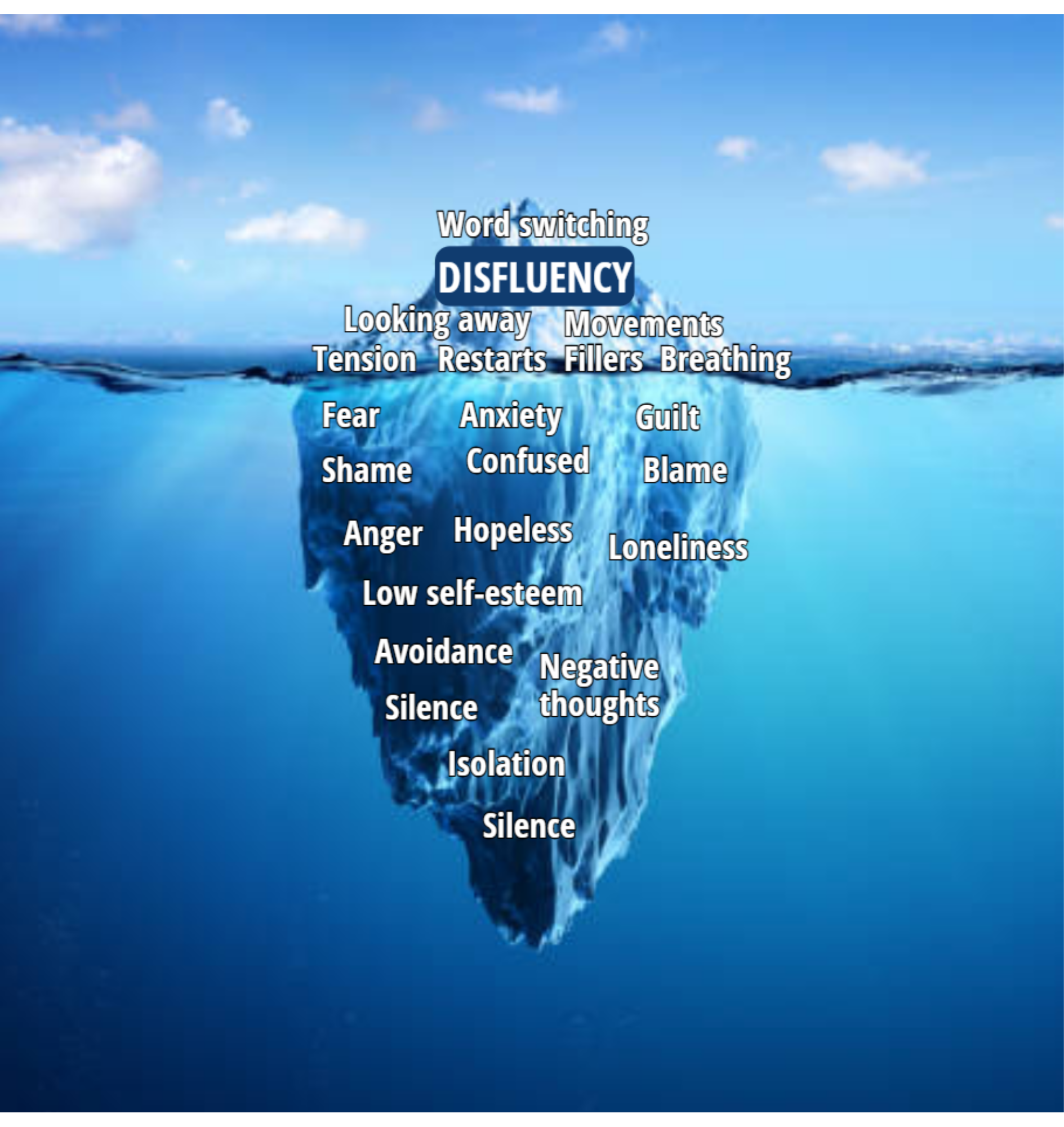
The surface features are comprised of two things: primary characteristics of stuttering (disfluencies) and secondary characteristics of stuttering (physical and linguistic behaviors for avoiding or suppressing disfluencies).
Primary characteristics of stuttering are commonly thought to include three disfluency patterns: repetitions (“d-d-d-dog”), prolongations (“mmmmmilk”), and blocks in which no phonation occurs (“My name is…………David”).
Secondary characteristics of stuttering include physical and linguistic behaviors a person uses to avoid or suppress disfluencies. Physical secondary characteristics may include averted eye contact, head turning, hand/foot movements, exaggerated eye blinks, or another movement associated with the moment of stuttering. Linguistic secondary characteristics may include word switching, filler words (e.g., like, so, um, uh), restarts (i.e., repeating the start of a sentence), or other speech patterns associated with the moment of stuttering.
The below-the-surface features of stuttering are comprised of negative thoughts, unpleasant emotions, uncomfortable sensations, and participation-related avoidance behaviors. Examples may include thoughts like “People will laugh at me,” emotions like anxiety or shame, sensations like a pounding heartbeat or facial tightness, and avoidance behaviors such as silence or avoiding certain people, places, or activities.
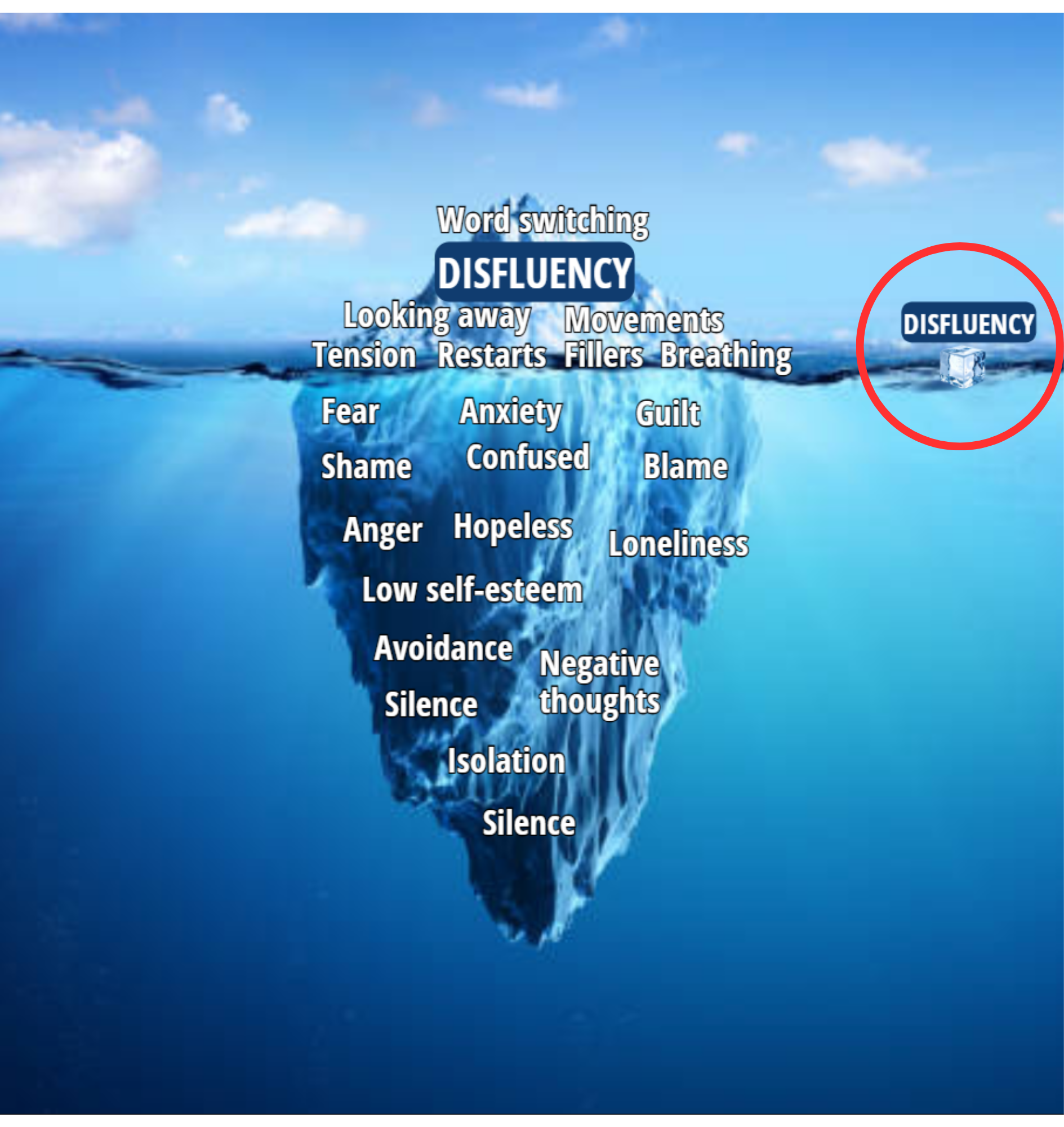
However, people who stutter were not always icebergs; they were once fluent, like everyone else. Then, at some point their natural speech and language development included a neurological variant: stuttering. The original disfluency ice cube took shape.
Children learn the stigma of stuttering early. Some children are told explicitly that there is something wrong with how they speak. Others learn through concerned facial expressions, advice to slow down, and praise when they speak fluently. Even if the message isn’t explicit, the lesson is powerful: stuttering is a problem to be fixed.
Stigma is not the only way children learn to perceive stuttering as a problem. The momentary “loss of control” they experience during a moment of stuttering can itself feel confusing or frightening. Without reassurance and guidance from trusted adults—who may feel confused or frightened themselves—the child may begin to believe that something is wrong with them.
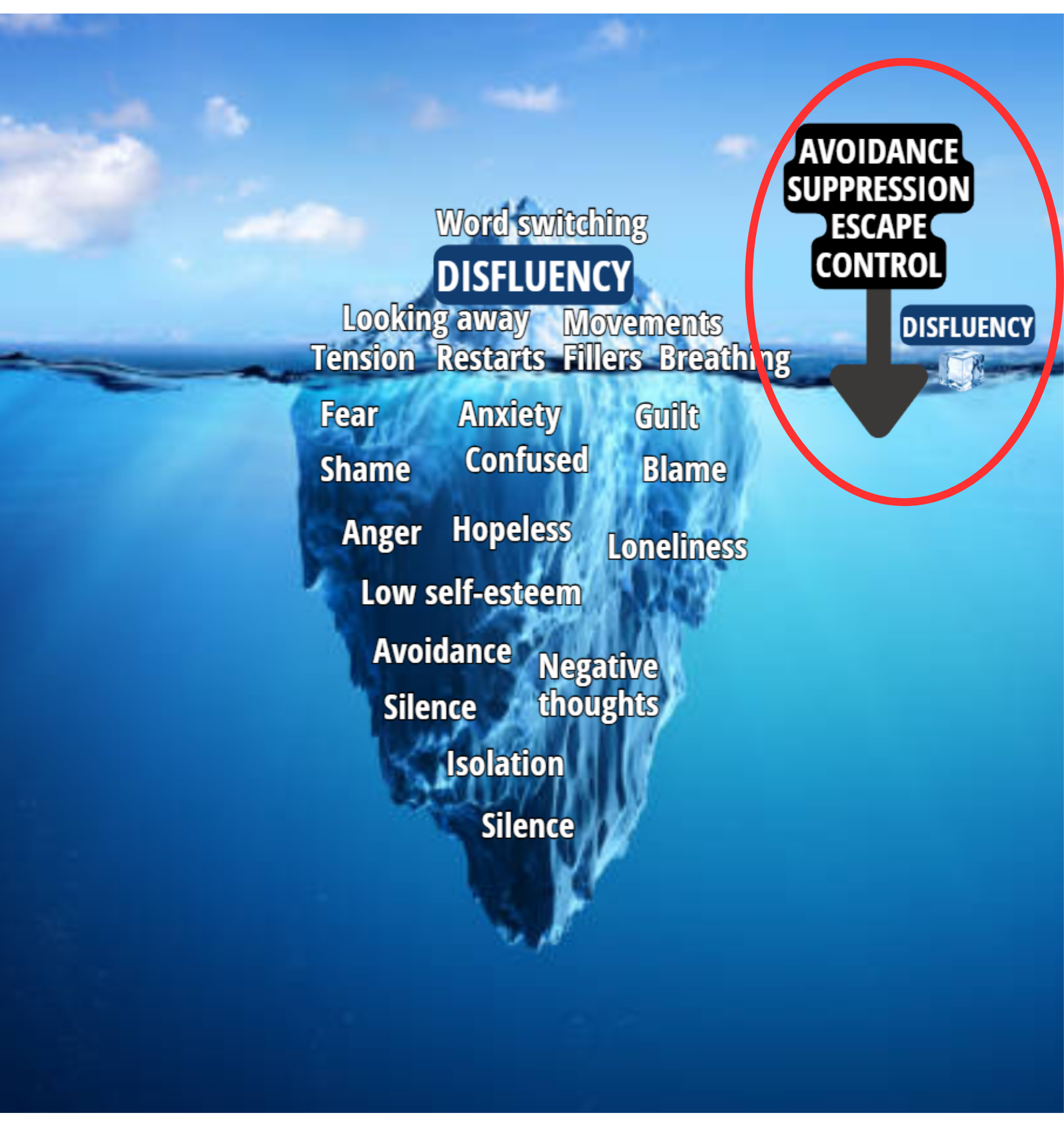
So the child tries to fix their disfluencies the best they can. When they feel a stutter coming, they try to suppress it. If they anticipate one, they may avoid the word or the utterance altogether. In our iceberg analogy, we can think of it as submerging the ice cube below the surface, out of earshot of the listener.
Like ice, however, stuttering is buoyant—it always rises back to the surface.
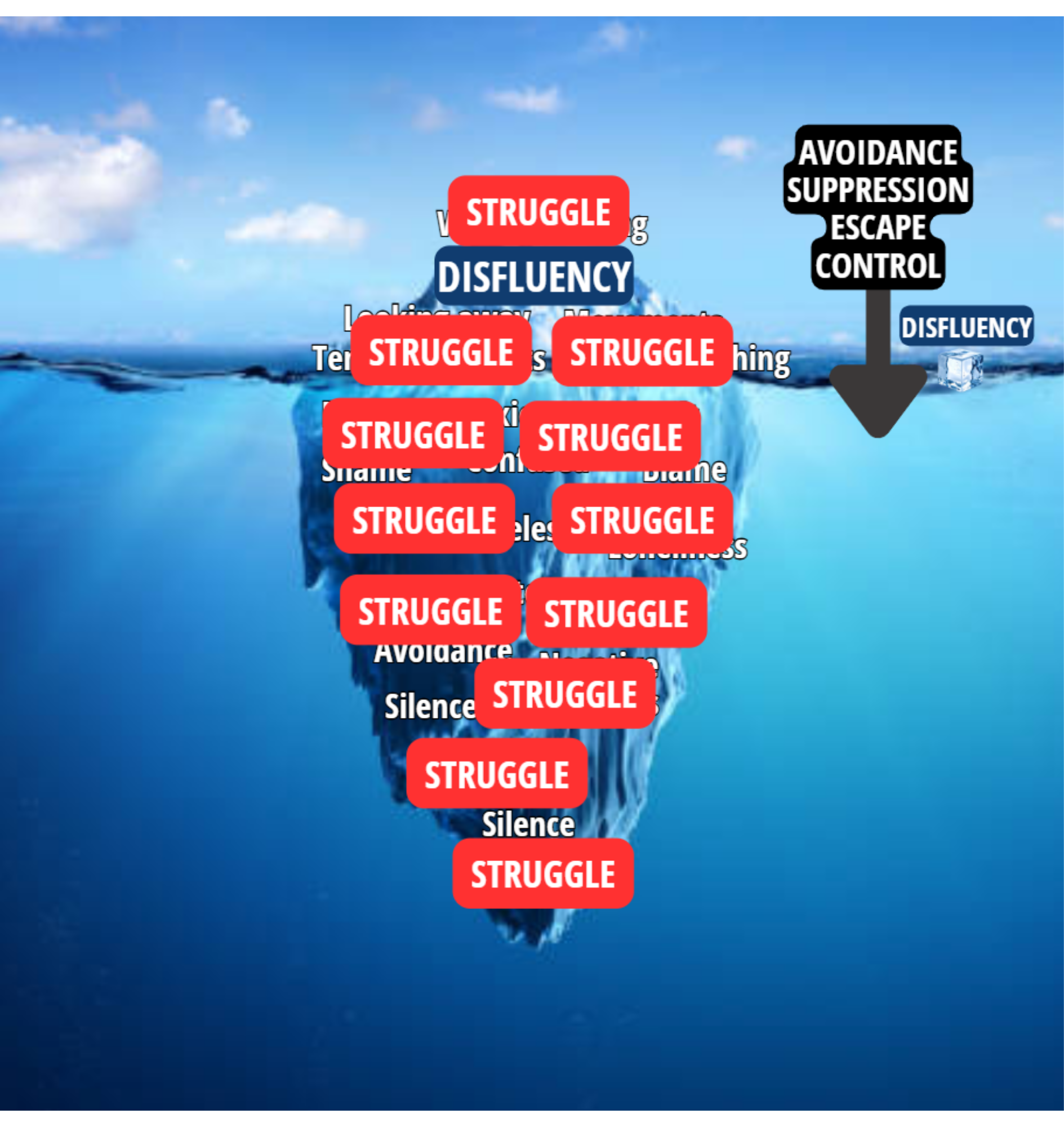
When the ice cube rises to the surface, it does so with accumulated ice. When stuttering resurfaces, it does so with accumulated struggle. When we avoid and suppress disfluencies, we add surface struggles (i.e., physical and linguistic secondary behaviors) and internal struggles (e.g., shame, anxiety, guilt, isolation, etc.) to the stuttering experience.
Avoidance doesn’t just reduce opportunities to stutter; it also teaches the brain that stuttering is dangerous. Avoidance leads to struggle, struggle leads to avoidance, and before long, the struggle cycle is in full effect. With each attempt to avoid or suppress disfluency, more struggle is added to the stuttering experience.
The ice cube becomes an iceberg.
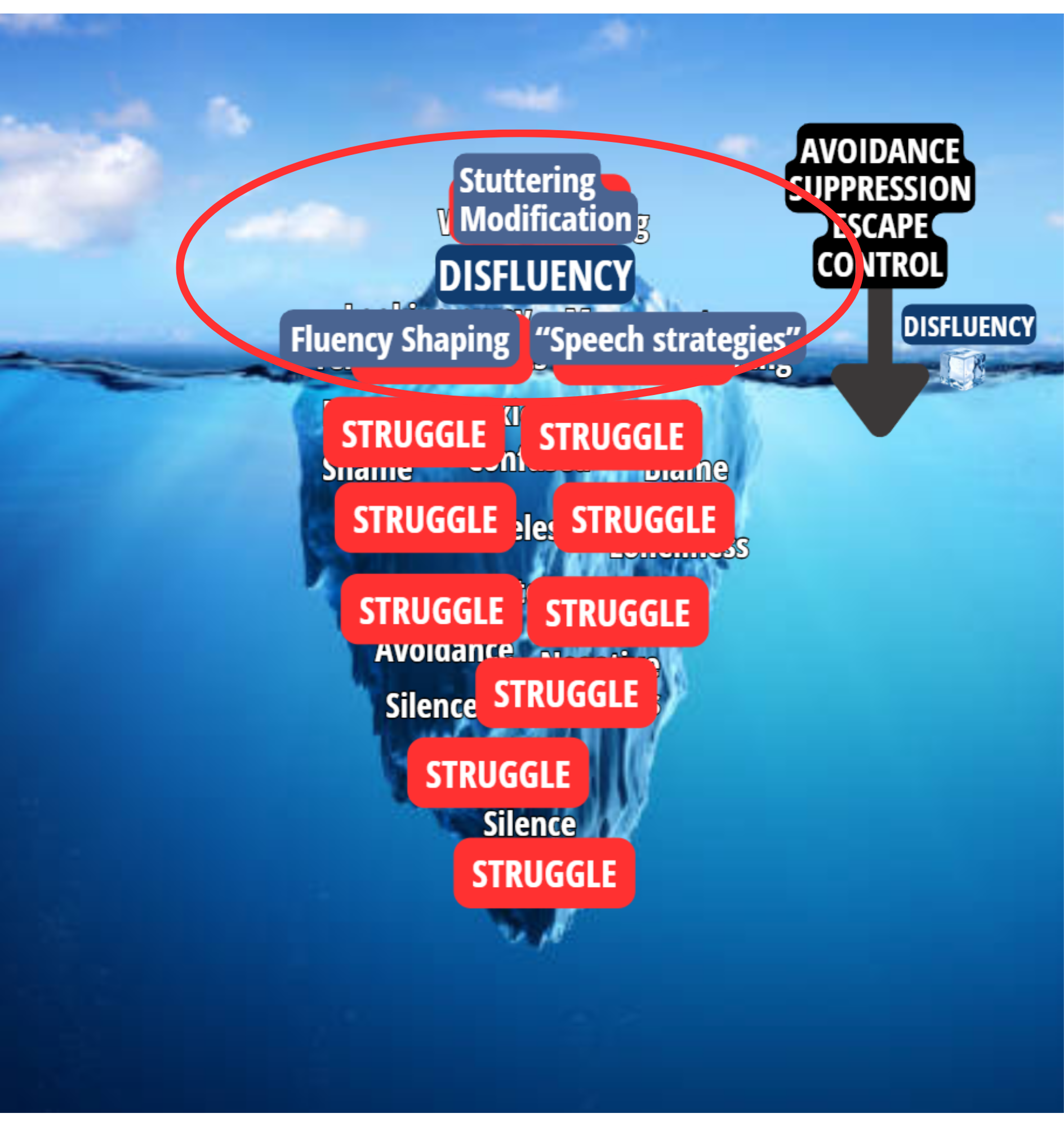
Traditional speech therapy has often focused on teaching fluency strategies aimed at eliminating disfluencies. When fluency strategies are used primarily to avoid or suppress stuttering, they can function similarly to the secondary behaviors that people who stutter naturally add to their speech.
Fluency strategies and secondary behaviors can both sometimes reduce stuttering, particularly when demands are low and communication occurs in safer speaking situations. However, when a person who stutters encounters higher demands in a moderately or highly feared speaking situation—pop!—the stutter reemerges, often more intensely than before.
For many people who stutter, the greatest impact isn’t the disfluency itself—it’s the struggle that develops around it.
What causes the struggle? Avoidance.
Fluency-focused speech therapy may offer short-term surface-level relief, often at the cost of adding even more struggle beneath the surface.
This is why the field of speech therapy is (slowly) moving away from strictly fluency-focused approaches toward more holistic ones. Increasingly, research suggests that lasting and meaningful change comes from addressing the core problem (struggle) and its underlying cause (avoidance).
In practice, this often means helping people approach, rather than avoid, moments of stuttering. Therein lies the paradox to reducing the iceberg and finding freedom from struggling with stuttering.
Want to learn more about reducing struggle in your communication? I offer free consultation calls for individuals and families across Washington state, including state-wide teletherapy and in-person speech therapy in the North Seattle area.
